reconciling things

“Allow it all to happen: beauty and terror…” Rilke

If you are not a person who randomly scribbles notes in journals, in tiny booklets lost in the bottom of your purse, and on the backs of envelopes of bills you forgot to pay you might not understand this. If you do not find yourself saving little bits of poetry in your phone, dog-earring pages of books so that best lines can be found again and again, or hear yourself saying things like, “What is that one thing Flannery said?” then maybe this will not resonate with you.

I process my inner world in words. In revisiting some words, I find they no longer fit–like shoes I have outgrown. Sometimes however I find old words that still feel like putting on that favorite sweater you haven’t worn in years–it still smells, feels, and fits like a cozy skin.

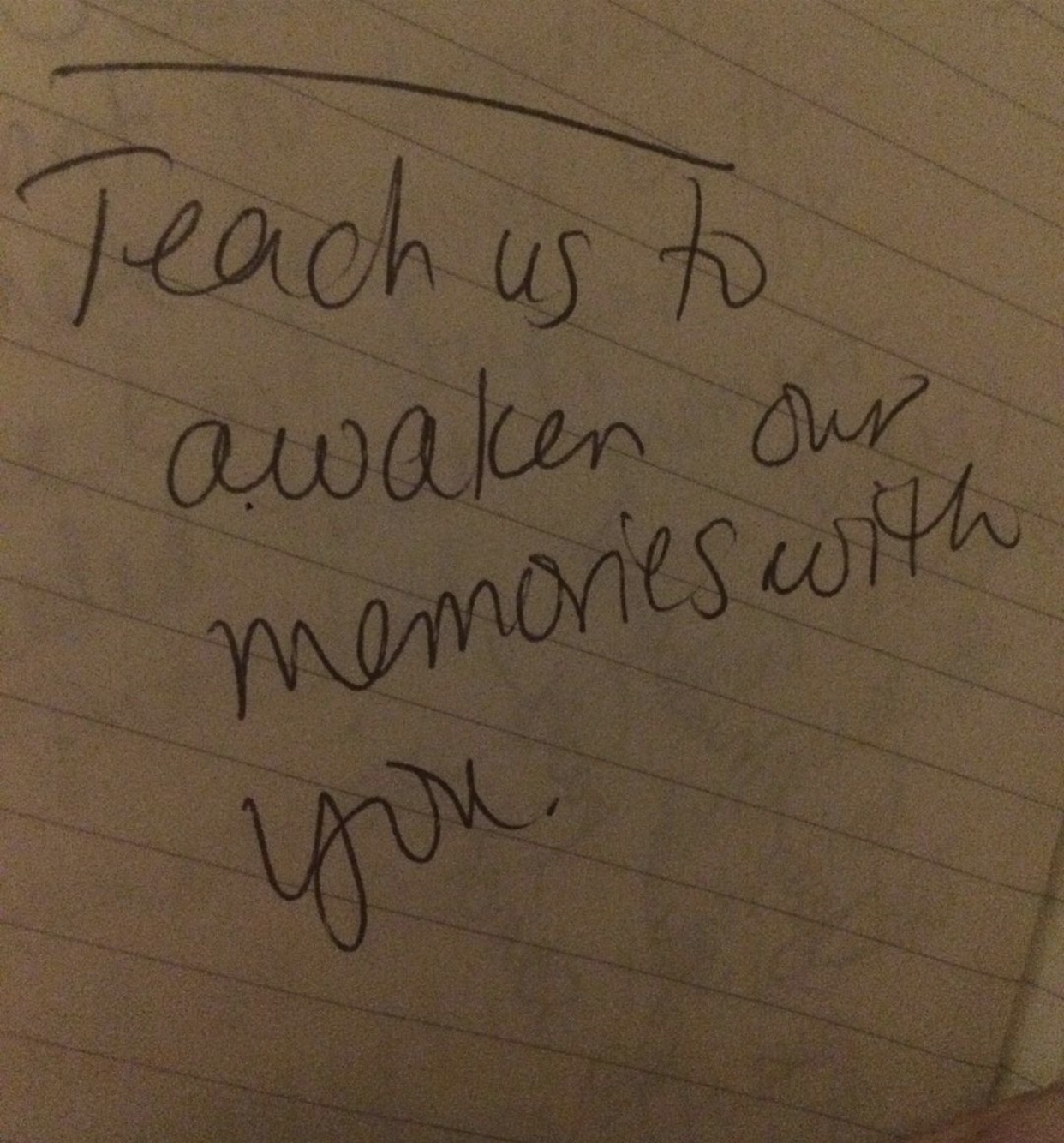
something hastily scribbled in a notebook living in the bottom of my purse

Four years ago my life changed in one dramatic moment of just unbelievable courage. I had lived in the oppressiveness so long that one could say I was used to it. I rationed my peace like someone with limited oxygen at the bottom of the sea. I could live on so little peace that it seemed normal. But, God, who bottles tears and lines his throne room in perfect symmetry with my wonder and prayers, had a plan to rescue me and bring me back to the surface. Four years ago I set a boundary I didn’t know if I could keep. Four years ago I said the words I meant with my marrow. In that moment my life and the life of my children changed. I said, “That’s enough.”

Continue reading

Hey, guess who was spotted speaking her mind outside the blog? This girl.

First, I was honored to be asked to be on the Ideas Digest podcast taking up the question of whether it was an objective good to have children.

I decided not to make any overtly religious arguments, but to be more philosophical in my approach. It was loads of fun. Give it a listen and tell me what you think!

Next, I was asked to be on the Catholic4Rednecks podcast telling the story of my journey from charismatic Protestantism to Catholicism.

What a delightful and fun conversation!

This one comes in two parts:


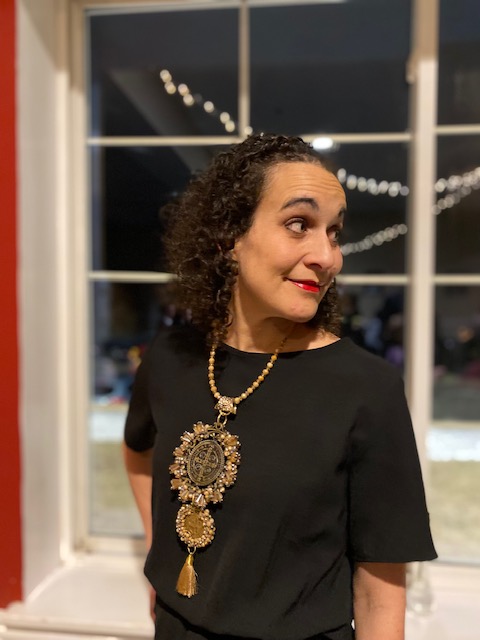
Besides my obviously epic taste in jewelry, tell me what you liked about my public appearances!

I will preface this disjointed post by saying that I don’t expect everyone to follow my train of thought here. It IS rather disjointed, but it flowed in my stream of consciousness this way as I talked with two friends: one in the afternoon with tea around my fire. The other way late into the night with vodka on the Feast of the Annunciation. Which, come to think of it, is a perfect feast for pondering this idea of voice–whose voice, how it is heard, and what it all means.

So, let me begin with Drama of the Gifted Child by Alice Miller. A week or so I was reading along being all open-minded, but on the struggle bus. It’s not a difficult book to read in the sense that the ideas are not difficult–even if I disagree with some of them, I do understand them. It’s not a particularly long book either. But I was just so unnecessarily annoyed with it. For such a popular book I found myself ready to chuck it across the room in exasperation with how poorly it is written. I had a little check-in with myself, asking myself why I was so irritated with it. And it came to me that it is the voice. What voice is this? This was not written nor translated by someone who has English as their primary language. I realized that unaware I was reading it in my head with a Russian or Eastern-European accent. It was not the ideas that annoyed me so much as the clumsy way they were being communicated–which pointed to it much more being a me-problem. Mea Culpa. (I then googled it and confirmed my suspicions.)

This episode of me trying to sort out whose voice something was written reminded me of early in my conversion to Catholicism. I got a Catholic Bible from my BFF. I took up the Deuterocanonical books with enthusiasm. Then I struggled to get through them because I didn’t know the voice. You see, I had read the 66 books of the Protestant canon so many times. Those books felt familiar and comforting, like walking into your grandmother’s house and knowing where she keeps the treats, where the best books are on the shelves, and to immediately get dibs on the coziest chair.

These new books felt awkward to me, not because of the truths they contained, but because I simply didn’t know their voice. I had to sit with them awhile and learn their rhythm. It was like I had to tuck myself next to the Holy Ghost and ask to see things through new eyes. What are you looking at? May my eyes rest there. Now they feel so much more alive and active and beautiful and tender then when I first started reading them. I can find my place amongst their images and listen to God point out the intricacies.

Continue reading

I currently have about 1,589 ideas running around my brain, but none of them taking shape of a cohesive post. But I have a bunch of random things we would talk about if we were sitting down together over a cup of chai with an extra shot of espresso. Madame Zeroni, the dog, would be begging for crumbs from something loaf-like I have baked for you. We would get comfy on the couch, or better yet in the rocking chairs that are around my fire. We won’t have a fire burning much longer, the days are getting warmer. So, let’s enjoy these last few while we can, getting cozy and talking about books, music, prayers, the deep things on your heart and mine, and the dumbass things people say. Let’s catch up and spill the tea while sipping our tea in gratitude that here we are over the halfway point of Lent. We have met Jesus along the way…and heard his gospel being proclaimed to the ruins of our hearts.

Continue reading

The Liturgy during Lent in the Maronite tradition destroys and rebuilds me every week it seems.

It begins with the Wedding at Cana and Jesus’ first public miracle. The reality of the situation was that they were out of wine. The truth, however, was greater than that situation. Jesus was going to show that he was not confined to the boundaries of the material world.

The next week is the Healing of the Leper. The man begged for healing. The hymn in the Rite of Forgiveness says “Christ took away, by his passion and saving death, the burdens imposed on us by Mosiac law.” The Mosaic law that said he needed to be outside the camp, that he was unclean, and untouchable. The reality of the law had its limits, but the truth was that those Jesus says are clean, are clean. What Jesus says is true, is true.

Continue reading

“Hi, my name is Daja and I’m a recovering People Pleaser.”

(Your part is “Hi Daja!” enthusiastically so I know you’re not mad at me.)

Sad Divorced Woman

I remember when I had to go to court for my divorce to be finalized. I stared into my closet. What would be the last thing I would wear as his wife? You can be sure I did my make-up and fixed my hair. I would not wear my grief like a badge of honor. I wanted to shine.

Throughout the last few years one indication of who was really rooting for me and who was not was their reaction to how put together I looked going out. There is a difference between “Wow, you look great!” and “Wow….you look….great?” It was clear who expected me to be falling apart and letting myself go. I had to play the part of the sad divorced woman in the story they had crafted of me in their minds. But when I looked good, smiled, laughed, went out with friends, it didn’t fit the narrative.

And while part of that is my vanity (I fully admit that I can be very vain), part of it is simply to live an accurate representation of the truth–the truth of the goodness of God in my life. I might at times be sad. I may be divorced. And I am a woman. But I am not a sad divorced woman. I am a beloved daughter of God. I am striving to live the endangered feminine image, established by eternal decrees–Mother, Virgin, Bride. As Gertrud von le Fort writes it is not man, but the woman who must rescue this image from a culture bent on its destruction.

Continue reading

In today’s Old Testament reading in the Maronite lectionary we read about Naaman, commander of the army of the king of Aram. He was a mighty warrior, successful in battle, and therefore a great favorite with the king. However, he suffered with leprosy. In his raids he took a young Hebrew girl as a slave and gave her to his wife. One day this young girl says to her mistress that Naaman could be healed if he were with the prophet of God in Israel.

The audacity, right? “Yeah, you know the land your husband raided and stole me from? Yeah, they could heal him, but probably too late now. I mean, he did raid their land, so…” Was she being prophetic or cheeky? The text doesn’t say. I imagine it cheeky.

Naaman took this information to the king. I imagine that being an interesting conversation, as well. “I did exactly what you said and raided the land of the Hebrews. Turns out their prophet could heal me. Or I could just die. Your call.”

The king of Aram writes a letter to the King of Israel and sends along ten talents of silver, six thousand shekels of gold, and ten sets of garments. I am no biblical scholar, but I think that translates roughly to a crap ton in exchange for a word from the resident prophet. Does this make up for the previous raid? Is it the ancient equivalent of “My bad”?

The king of Israel, however, sees it as a bait for war. The king of Aram is picking a fight. He tears his clothes in despair. Somehow Naaman’s skin condition has now become an international incident.

The prophet Elisha gets word and says basically, “What are you worried about? Am I a prophet or not?”

He sends a message to Naaman that says “Go, wash in the Jordan seven times.”

Continue reading

I haven’t posted on this blog in over a month. It’s not because I don’t have things to say. I think it is more that this time of year, Advent, specifically, lends itself to darkness and silence. I have been writing more than ever, but those thoughts are going other places. My thoughts feel connected inside myself, but when I go to put them here, they seem disconnected and random. So, perhaps I shall just deliver them to you that way. Sometimes you sit down to a plate of food composed with care and everything is harmonious and makes sense. Sometimes you go to a potluck and eat spaghetti, fried chicken, sushi, and chocolate pudding all on the same plate. And you enjoy it. This is that.

  • This time last year I was hanging by a thread. I was so depressed, it was difficult to keep my head above water. This year, although financially and relationally not much has changed, I feel so much better. And I think it is that I no longer work in the same kitchen where I never saw sunlight. I would go into work in the mornings in the dim light and leave in the afternoon after it was already dark. My kitchen had no windows. So, I just felt so sad all the time. This year I feel hope. It feels almost indulgent. It’s audacious that I should feel this hopeful about my life when there are no outward indications that things are on an upward trajectory. Hope is not always so rational. Yet its very irrationality feels appropriate for the darkest days of the year. “The heart has its reasons that reason does not know.” (Blaise Pascal)
  • Maybe hope is the perfect virtue of bleak midwinter. This last week before Christmastide feels like hope. We are living in a time of “already, but not yet.” We are waiting for the Christ child. We are waiting for the shocking physicality of our faith as God takes on flesh. God’s love is about to burst into visibility to the world. Right now he is tucked in the womb of the Blessed Mother. She carries a great secret and shines forth hopefulness. You know how they say that pregnant women glow and are radiant? Can you even imagine how much she radiates hope in the final days of hiding Divine Love in the secret places?
  • If she is the human ideal–the most sublime creature in existence–and we are to follow her, maybe in some tiny little way in these final days of Advent, we can radiate hopefulness because we know Divine Love is coming? The already, but not yet.
  • Today in the Maronite liturgy we observed the Genealogy of Jesus. For some reason I found such delight in hearing the genealogies read. The very idea that these names are read for thousands of years, faithfully, moved me. You know how when someone dies we say, “May his memory be eternal”? How much more real is this idea knowing that these names are being proclaimed eternally. We just keep saying who begot whom in perpetuity. It makes the Gospel so real, so tangible. Jesus came of these extraordinarily ordinary people who lived real lives, who did their chores and made their suppers and fell in love and quarreled with their neighbors and said their prayers and watched the sunrise. As my priest said this morning, they were “faithfully human.” And while no one will likely ever be reading my name fourteen generations from now, if my name is said in the presence of God, that is enough.
  • As the names were read today it affirmed for me this little practice I have of saying the names of the dead at Mass. At the consecration or during the intentions sometimes I just say the names of my beloved dead–or the beloved dead of my friends. I have this sense that Jesus, fully present there on the altar as the Holy Spirit descends on the gifts, will hold these names in his passion. I don’t know when I started doing this but hearing the names of the generations read today made me think I will keep up this practice of saying their names.
  • This year I am feeling very cozy. I feel like sitting by my fire writing cards and drinking mulled wine is perfection. I want to do nothing else but wear fuzzy socks and read books to my kids cuddled in the living room. I didn’t feel as cozy in past years. I felt rushed and sad and exhausted. I am still tired (I mean, I work two jobs, homeschool the kids, and try to be active in my parish) but when I come home from a long day of work there is a bowl of soup my daughter made and whiskey to sip and I just sit by the woodstove and give thanks. I think gratitude has made a huge difference this year, too. I was getting a wee bit down two weeks ago and a friend texted me, “What three things are you grateful for?” This is his way always of pulling me out of a funk. It works for me, because life really is rather lovely, isn’t it? “If your daily life seems poor, do not blame it; blame yourself, tell yourself that you are not poet enough to call forth its riches; for to the creator there is no poverty.” Rilke

What I am reading:

  • For my heart: Good Boundaries and Goodbyes by Lysa TerKeurst and Resisting Happiness by Matthew Kelly
  • For the family read aloud: A Christmas Carol by Charles Dickens
  • For fun: Anthony Esolen’s translation of Dante’s Inferno

What I am listening to:

What’s cooking:

  • Bhajis. Gluten free and vegan, these are on the menu for every season of fasting and I love them.
  • Winter Squash stuffed with things. Delicata, acorn, babynut, all the squash–stuffed with various mixtures of chickpeas, rice, herbs, tomatoes. When not fasting stuffed with chorizo, shredded pork, bacon, goat cheese, and creamy risotto. It is the hygge of food.
  • Mulled Wine. This is a winter staple and you should try it. In a pot, preferably over your woodstove, place about ¼ cup of maple syrup, a few slices of orange, a handful of whole cranberries, two cinnamon sticks, a star anise, and a bottle of dry red wine. While usually I would not say to buy cheap wine or anything that comes in a box, you can get away with it here. Heat it gently, stirring occasionally but do not let it boil. Ladle it into warm punch cups and add about a half an ounce amaretto or brandy. Garnish with a candied orange.

I’ve always made a point to eat with my kids. Three meals a day, pretty much, give or take. Yes, there are plenty of days I do not feel like cooking and days when it would be so much easier to just say, “Everyone fends for themselves.” But nine times out of ten, we eat together. Mornings start with a hymn, eating together, and then devotional time as a family. We are breakfast people. No one passes up chorizo and eggs. We eat lunch together, followed by naps when the kids were younger. Sometimes I still take a nap. We eat dinner together, followed by night prayers. When I am not around or at work, meals still get eaten together.

My exhusband was never on board with this plan. He would take his food to the computer or TV, outside, or even the car, preferring to eat alone most of the time. But, the kids and I would eat together always. Many times I would read them stories as they ate.

The insistence on eating together has had some interesting consequences. First of all, we all learned to cook and work together in the kitchen. It’s not usually too difficult to convince the kids to help in the kitchen. Meals come together pretty quickly because everyone knows how to handle knives, the difference between mixing and folding, and how to make perfect rice.

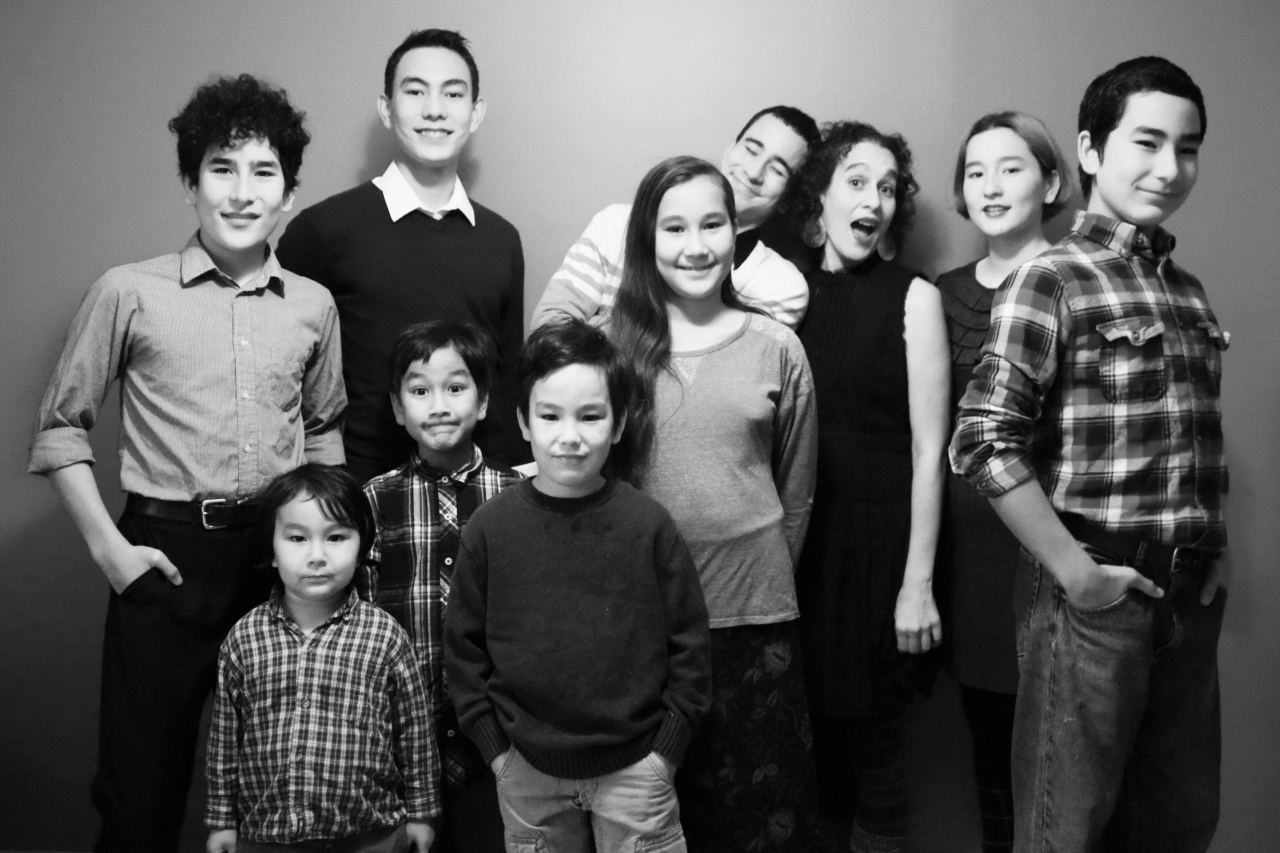
Secondly, we learned to be in each other’s faces all the time. We have a big family and a small table. And we like it that way. Our meals are rather rambunctious at times. But that is where the details of life really come out. That is were we bond–and fight–and bond some more. Other people having joined our meal times have said they can be overwhelming. But also that there is warmth. Take us or leave us, we will be there asking someone to pass the butter and fighting over who gets to eat with the threek (which the Littles say is a fork with three tines and is a permanent part of the Gombojav lexicon).

Continue reading

Here I am again with your simple (overly simple?) answer to a complicated question.

For real, I think sometimes we do overcomplicate things. Life, faith, love, and all good and true things should be approached with a childlike trust and dependence of our faithful God. Everything should be viewed through the eyes of wonder, because everything is far more miraculous than our overly rational and pragmatic minds have made them out to be.

Continue reading