

(This post inspired by Christina Elisha, with much gratitude for asking the tough questions and wrestling with the answers.)
This week (this month? this year?) has been rough. The heaviness is in the air, even if, like me, you don’t own a TV and refuse to watch the news. The news still reaches you–violence everywhere. Violence on public transportation, violence in churches, schools, and college campuses, violence in the houses of government, violence in the womb.
It is as if we have collectively forgotten what it means to be human.
Just this morning I got several messages in my Instagram. The first had the tone of “you shouldn’t be sad about X unless you expressed equal amounts of emotion about X, Y, and Z.”
My dears, empathy, like suffering, is not a competition.You are allowed to show imperfect compassion. We are not built to carry all the weight of the world equally and there is no limit to atrocities over which to mourn. If I hold back my empathy from X because I was unaware or didn’t have bandwidth Y and Z, then I become calloused to pain and thereby impervious to love.
CS Lewis reminds us that to love is to be vulnerable.
“There is no safe investment. To love at all is to be vulnerable. Love anything, and your heart will certainly be wrung and possibly broken. If you want to make sure of keeping it intact, you must give your heart to no one, not even to an animal. Wrap it carefully round with hobbies and little luxuries; avoid all entanglements; lock it up safe in the casket or coffin of your selfishness. But in that casket—safe, dark, motionless, airless—it will change. It will not be broken; it will become unbreakable, impenetrable, irredeemable. The alternative to tragedy, or at least to the risk of tragedy, is damnation. The only place outside of heaven where you can be perfectly safe from all the dangers and perturbations of love is hell.” (CS Lewis in The Four Loves)
What can one do, except to lean into love, to feel the pain, and let that love spread through society, creeping into the secretly hurting places that have become numb. Otherwise, I am afraid Lewis is right and we are forging our own hell away from lifesaving love.

Another note in my inbox today had the tone of “Well, X deserved it because he was not a good person.” And my heart was crushed again. Mercy by its very nature is unfair. It probably rubs you the wrong way when it is shown to others, but not when you need it yourself. Mercy often doesn’t feel as much like a warm blanket as it does a thorn in the side. The thing about Christianity is that it turns our notions about the world and about ourselves upside down. It says that beggars have a place at the table. That the unworthy get an equal share. Sinners are welcomed. And not just welcomed; being a sinner is your ticket in.
Now, I might not care much for your particular breed of sin. Your proclivities may make be squirm. Or rage. On my sin-scale the evil that abides in your heart is 100x worse than the evil that abides in mine. But looking at the cross, I must confess that Jesus doesn’t use my sin-scale. That radical confrontation with Jesus puts to death the notions of my own goodness.
In a letter to Dorothy Day, Thomas Merton wrote, “Our job is to love others without stopping to inquire whether or not they are worthy. That is not our business and, in fact, it is nobody’s business. What we are asked to do is to love, and this love itself will render both ourselves and our neighbors worthy if anything can.”
Love of neighbor, even the unlovely ones, is at the core of our faith. I’m not saying it is easy, but it is right. It’s the only kind of reality I want to live in–not because showing mercy is fun, but because more often than not I am the one needing the mercy the most.
Living in this reality erases the possibility of having a “gotcha” response when your enemy falls. FAFO is not a Gospel virtue, it is the antithesis of the courage it took to pray from the cross, “Father forgive them, for they know not what they do.” Scripture is clear, “Do not rejoice when your enemy falls, And do not let your heart be glad when he stumbles; Lest the LORD see it, and it displease Him, And He turn away His wrath from him.” Proverbs 24:17-18
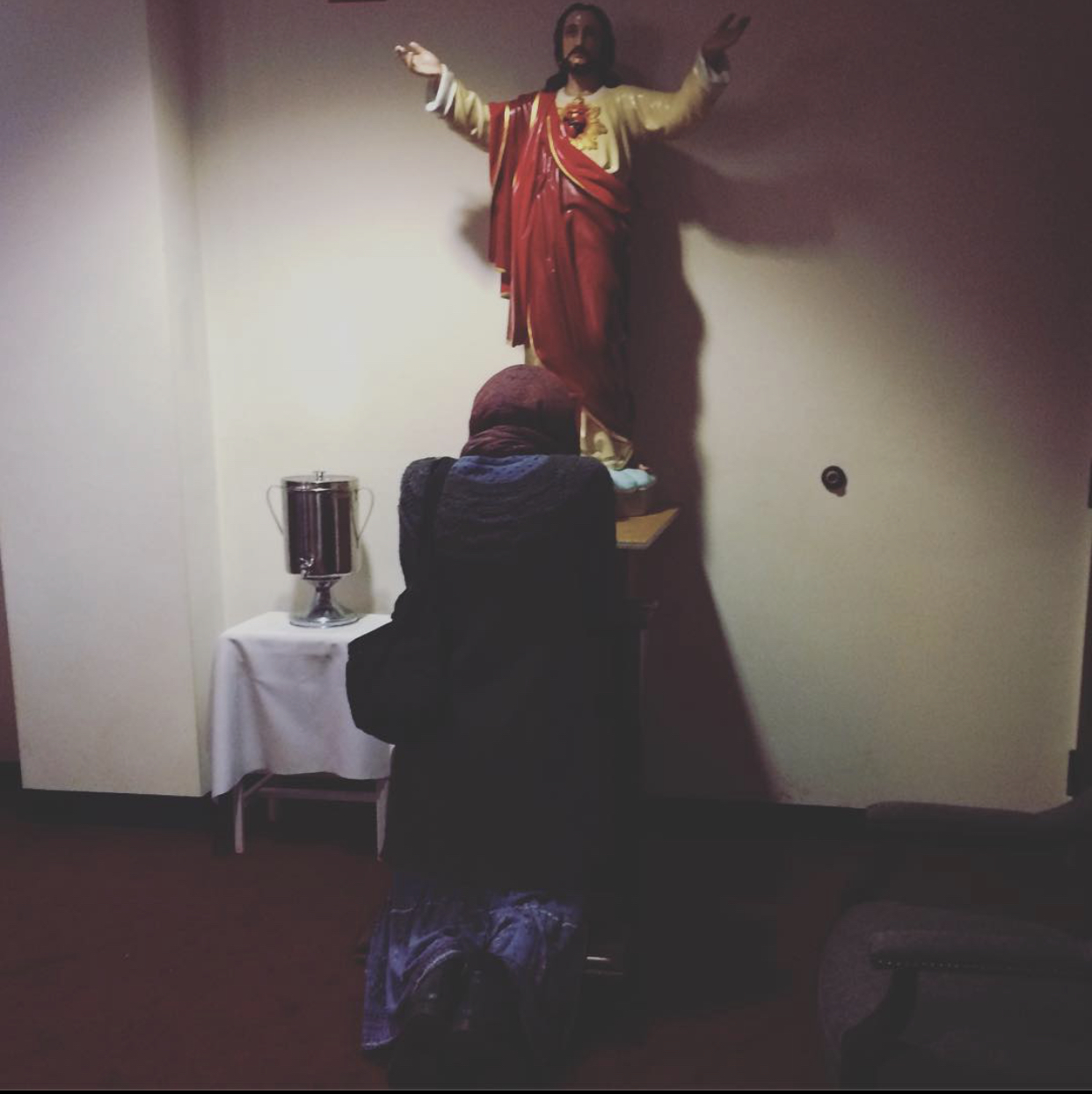
My friend texted me this week and said, “WHERE ARE THE MOMS?! Where is the empathy, comfort, quiet strength, and understanding? Where its the ability to hold painful things, hard things and knowledge of birth and death? Where are the Moms?”
I felt this so deeply. Where are the mothers? Mothers know how to hold space for life within pain. It’s written in our biology, you know. It is in the very fibers of our beings. Where are the mothers who hold the secrets of how to live and live well, walking in the valley of the shadow of death? Women have a gift for abiding in pain and seeing it through to the peace on the other side. Just one look at the foot of the cross and you’ll see the women. The disciples all fled in fear except John the Beloved. And he stayed because he was close to Our Mother. The women were there–mourning, forgiving, collecting the Precious Blood, praying, and hanging onto every word of the Lord.
Mothers, we know, somehow, in some ancient and intangible way to put the kettle on because the kids need to talk. We know how to hold the hand of the dying. We know how to do the primal sway with the woman in labor, breathing, and moaning in sync. It’s innate. No one can teach it to another. But it’s what we know without the need to explain.
Where are the mothers in these days of violence? The world has robbed us of our power and we have been complicit because we’ve just turned it over without a fight. Mothers, please, take back your place–your place of listening, engaging, mourning, praying, holding sacred things with fierce delicacy, rebelliously hoping.
Mourning is a sacred duty. It’s Queen Esther putting on garments of distress, dung, and ashes, and weeping for her people, and in doing so rescuing an entire nation. It’s St. Shmouni exhorting her seven sons to speak the truth without wavering as they were martyred one-by-one and giving her own life at the end. (2 Maccabees 20-41) It’s St. Veronica giving Our Lord her veil to wipe his face. It’s Our Lady hearing the Lord say, “Woman, behold your son.” You will never convince me that didn’t pierce her heart with the bitterest pain.
Mourning is that holy thing of embracing pain, welcoming hard things, and in the end…..
Blessed are those who mourn, for they shall be comforted.
 reconciling things
From one mother’s heart to another…
Sacred Heart of Jesus, make my heart like your Heart.
I love you, Daja!
LikeLike
I love you too!
“O’ Most Sacred Heart of Jesus, I place all my trust in You.”
LikeLike